The way people work has undergone a dramatic transformation over the past few years. Distributed teams, flexible schedules, and global hiring have become standard across industries. While remote work offers freedom and access to talent, it also introduces challenges such as isolation, miscommunication, and reduced team cohesion. Traditional tools like video calls and chat platforms address some needs but often fall short in recreating the dynamics of a shared workplace. This gap has led to the emergence of immersive digital environments designed to replicate and enhance office interactions. Virtual office spaces are now redefining how teams connect, collaborate, and build culture in a remote-first world.
Understanding Virtual Office Spaces
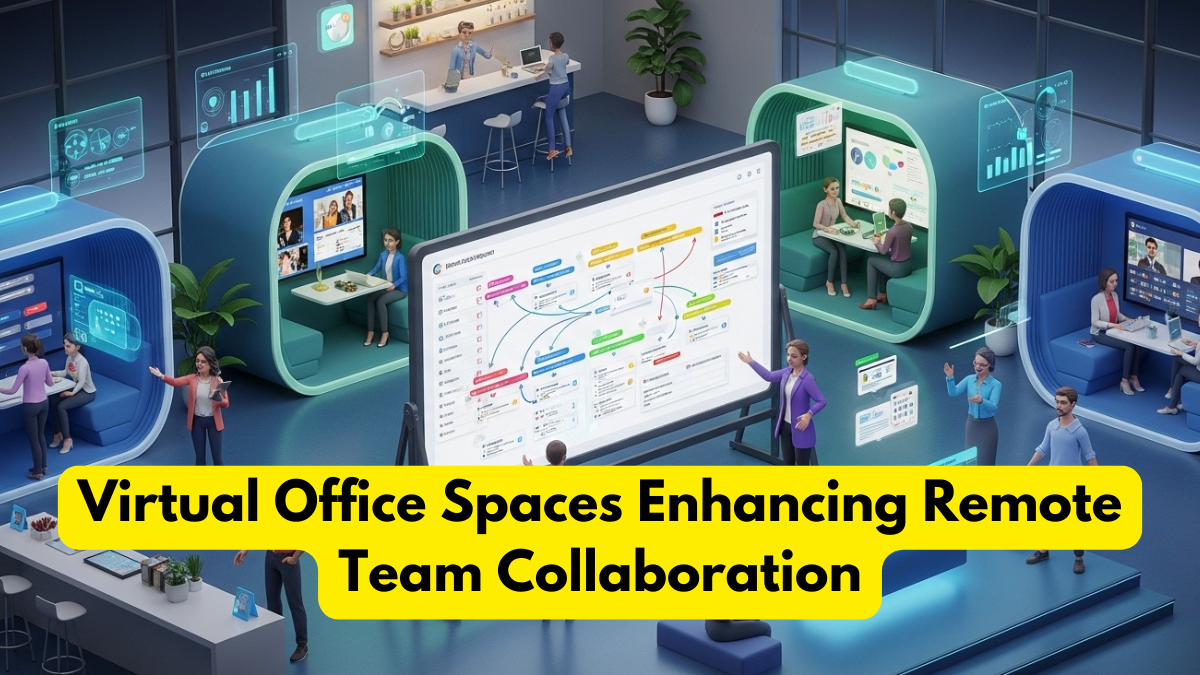
Virtual office spaces are digital environments where employees interact through avatars or interactive interfaces that simulate physical offices. Unlike standard video conferencing tools, these spaces allow users to move freely, join spontaneous conversations, and collaborate visually in real time. By offering a sense of presence, virtual office spaces make distributed work feel more engaging and human.
These environments are central to modern remote collaboration strategies because they encourage informal interaction alongside structured meetings. Many platforms also integrate elements of metaverse work, blending virtual reality, augmented reality, and persistent digital spaces to support ongoing teamwork. As a result, virtual office spaces provide a more immersive alternative to traditional remote tools.
Role of Remote Collaboration in Distributed Teams
Effective remote collaboration is essential for productivity and team alignment. When teams operate across time zones and cultures, clear communication and shared context become critical. Virtual office spaces enhance remote collaboration by enabling visual cues, spatial audio, and shared work areas that mimic real-world interactions.
Key benefits for remote collaboration include:
- Spontaneous conversations and quick check-ins
- Visual collaboration through shared whiteboards
- Improved team visibility and availability
- Reduced reliance on scheduled meetings
By supporting these interactions, virtual office spaces help teams maintain momentum and connection, even when working apart.
Metaverse Work and Immersive Team Experiences
The concept of metaverse work expands the capabilities of virtual office spaces by introducing persistent, immersive environments that exist beyond scheduled sessions. In these spaces, teams can collaborate on projects, attend events, and socialize in ways that feel more natural than flat screens allow. Metaverse work environments often incorporate 3D design, customizable avatars, and interactive tools that enhance engagement.
As organizations explore metaverse work, virtual office spaces become hubs for innovation and experimentation. Training sessions, onboarding programs, and brainstorming workshops benefit from immersive experiences that encourage participation. This approach strengthens remote collaboration by making digital interaction more dynamic and memorable.
Comparison of Traditional Remote Tools vs Virtual Office Spaces
The table below compares conventional remote work tools with virtual office spaces, highlighting the impact on remote collaboration and metaverse work:
| Aspect | Traditional Remote Tools | Virtual Office Spaces |
|---|---|---|
| Interaction Style | Scheduled and linear | Spontaneous and immersive |
| Team Presence | Limited | Strong sense of presence |
| Collaboration Depth | Task-focused | Context-rich collaboration |
| Social Connection | Minimal | Enhanced informal interaction |
| Metaverse Work Support | Not supported | Core functionality |
This comparison illustrates why virtual office spaces are gaining traction among remote-first organizations.
Benefits for Productivity and Team Culture
Adopting virtual office spaces offers measurable benefits for both productivity and workplace culture. Teams experience improved alignment as shared environments reduce misunderstandings and context loss. New employees onboard more quickly when they can explore virtual offices and interact naturally with colleagues. These benefits strengthen remote collaboration and reduce the social friction often associated with distributed work.
From a cultural perspective, virtual office spaces support inclusivity by giving all team members equal access to interaction, regardless of location. When combined with metaverse work features, organizations can host virtual events, celebrations, and informal gatherings that reinforce belonging and engagement.
Challenges and Adoption Considerations
Despite their advantages, virtual office spaces require thoughtful implementation. Some users may experience learning curves or technology fatigue, especially if platforms are overly complex. Hardware requirements for advanced metaverse work experiences may also limit accessibility. To succeed, organizations must align tool selection with team needs and provide training to support adoption.
Privacy, data security, and performance reliability are additional considerations. Choosing platforms that balance immersion with usability ensures that remote collaboration remains efficient rather than distracting. When implemented strategically, virtual office spaces enhance rather than replace existing workflows.
Long-Term Impact on the Future of Work
As remote and hybrid models continue to evolve, virtual office spaces are poised to play a central role in the future of work. They bridge the gap between physical offices and fully remote setups, offering flexibility without sacrificing connection. The integration of metaverse work concepts will further expand possibilities for collaboration, learning, and innovation.
Organizations that invest early in virtual office spaces gain a competitive advantage by building resilient, connected teams. Over time, these environments will become standard components of digital workplaces, redefining how remote collaboration is experienced.
Conclusion: Why Virtual Office Spaces Matter
In conclusion, virtual office spaces are transforming how distributed teams collaborate and connect. By enhancing remote collaboration and embracing immersive metaverse work environments, these platforms address the limitations of traditional remote tools. As work becomes increasingly location-independent, virtual office spaces offer a powerful solution for building productive, engaged, and future-ready teams.
FAQs
What are virtual office spaces?
Virtual office spaces are digital environments where teams interact, collaborate, and socialize in a simulated office setting.
How do virtual office spaces improve remote collaboration?
They enable spontaneous interaction, visual collaboration, and a stronger sense of presence among remote team members.
What is metaverse work?
Metaverse work refers to immersive digital work environments that use 3D spaces and virtual experiences to support collaboration.
Are virtual office spaces suitable for all teams?
They are most effective for remote or hybrid teams that value interaction, culture, and collaborative workflows.
Click here to learn more