Sound is no longer limited to left and right channels as spatial audio technology reshapes how people experience music, movies, gaming, and live entertainment in 2026. Traditional audio formats deliver sound in a flat, directional manner, but modern listeners now expect depth, realism, and emotional immersion. Spatial audio introduces a three-dimensional soundscape that places audio elements around the listener, creating a sense of presence that feels natural and lifelike. This evolution is redefining entertainment by turning listening into an experience rather than a passive activity.
The rapid growth of spatial audio technology reflects broader changes in consumer expectations and media consumption habits. As audiences spend more time using headphones, smart speakers, and immersive devices, demand for richer sound experiences is increasing. By simulating how sound behaves in real-world environments, spatial audio delivers immersive sound that enhances storytelling, realism, and emotional connection. This shift marks a major milestone in audio innovation across entertainment industries.
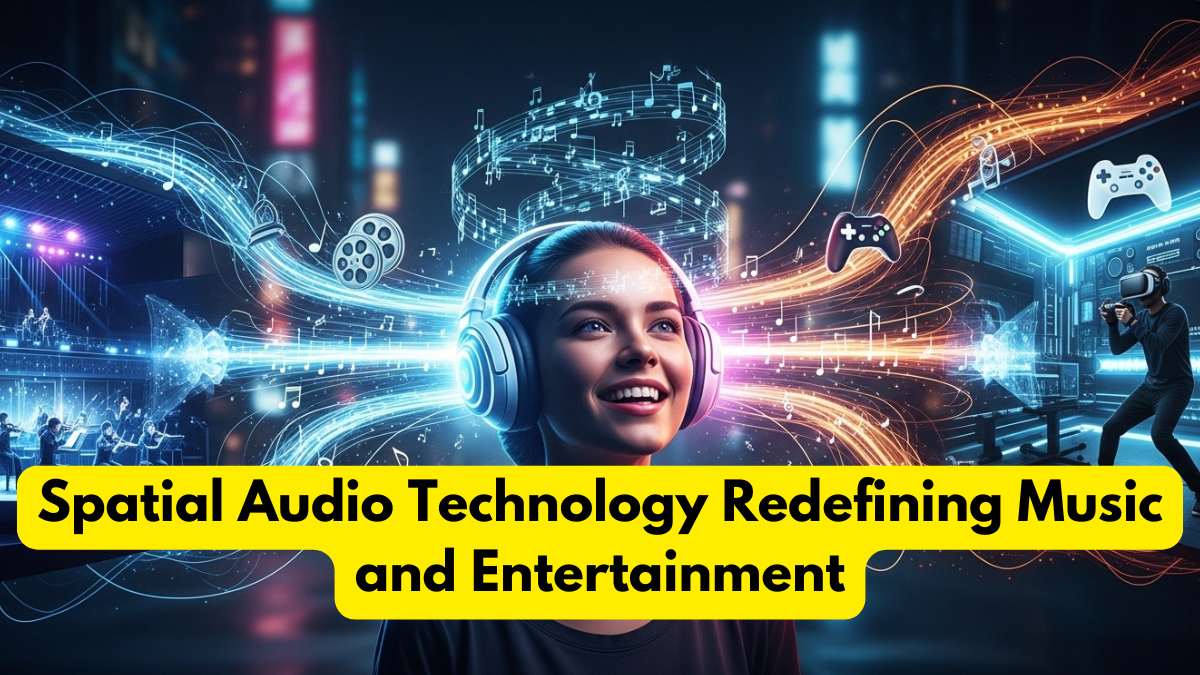
How Spatial Audio Technology Creates Immersive Sound Environments
At its core, spatial audio technology uses advanced algorithms to position sound in a three-dimensional space. Unlike stereo audio, which limits sound placement to two channels, spatial audio incorporates height, distance, and movement. This allows listeners to perceive sound coming from above, below, or behind them, mimicking how humans naturally hear in real life.
Immersive sound experiences are achieved through techniques such as object-based audio, head tracking, and binaural rendering. These technologies adjust audio output dynamically based on listener movement and orientation. For example, when a listener turns their head while wearing headphones, the sound source remains fixed in space. This realism enhances engagement and is a key reason why spatial audio technology is gaining traction across music streaming, film production, and interactive media.
Role of Audio Innovation in Entertainment and Media
The rise of spatial audio technology is closely linked to rapid audio innovation across creative industries. Artists, producers, and sound engineers are exploring new ways to use sound as a storytelling tool. In music, spatial audio allows listeners to feel surrounded by instruments and vocals, creating a concert-like experience at home. In film and television, immersive sound design adds depth and realism to scenes, heightening emotional impact.
Audio innovation is also transforming gaming and virtual experiences. Game developers use immersive sound to guide players, enhance realism, and create tension or excitement. As entertainment platforms invest in spatial audio capabilities, content creators are reimagining how sound can influence mood, attention, and engagement. This creative freedom is expanding the boundaries of what audio can achieve.
Benefits of Spatial Audio Technology for Listeners and Creators
The adoption of spatial audio technology offers significant benefits for both audiences and content creators. Listeners enjoy richer, more engaging soundscapes that feel closer to real-life experiences. Creators gain new tools to express creativity and differentiate their content in crowded markets.
The table below highlights the advantages of spatial audio compared to traditional audio formats:
| Audio Aspect | Traditional Audio | Spatial Audio Technology |
|---|---|---|
| Sound Depth | Flat and directional | Fully immersive sound |
| Listener Engagement | Passive | Highly engaging |
| Creative Possibilities | Limited placement | 360-degree sound design |
| Realism | Moderate | High realism |
These benefits demonstrate why spatial audio technology is becoming a defining feature of modern audio innovation. As hardware and software continue to improve, immersive sound experiences are becoming more accessible to mainstream audiences.
Challenges and Limitations of Spatial Audio Technology
Despite its promise, spatial audio technology faces challenges that affect widespread adoption. Hardware compatibility is a key consideration, as immersive sound experiences often require headphones, speakers, or devices that support spatial rendering. While adoption is growing, not all consumers currently have access to compatible equipment.
Another challenge involves content production. Creating high-quality spatial audio requires specialized tools, expertise, and workflows. Audio innovation must balance creativity with technical complexity to ensure consistent quality. Additionally, overuse or poor implementation of immersive sound can lead to listener fatigue. Addressing these challenges will be essential for maintaining user satisfaction and long-term adoption.
Conclusion
As entertainment continues to evolve, spatial audio technology is redefining how sound is created, delivered, and experienced. By enabling immersive sound environments and unlocking new possibilities for audio innovation, spatial audio is transforming music, film, gaming, and interactive media. In 2026 and beyond, this technology will continue to shape the future of entertainment by bringing audiences closer to the stories, emotions, and experiences sound was always meant to convey.
FAQ
What is spatial audio technology?
Spatial audio technology is a sound format that creates three-dimensional audio experiences, allowing sound to be perceived from all directions.
How does immersive sound improve entertainment?
Immersive sound increases realism and emotional engagement by surrounding listeners with audio elements.
Is special equipment needed for spatial audio technology?
Many experiences require compatible headphones or speakers, though support is becoming more widespread.
How does audio innovation support spatial audio?
Audio innovation provides new tools and techniques that enable creators to design immersive soundscapes.
Will spatial audio become standard in entertainment?
As adoption grows and hardware improves, spatial audio is expected to become a standard feature across media platforms.
Click here to learn more