Over the past few years, a noticeable shift has emerged in where people choose to live, and rural relocation has become one of the most significant population movements of the modern era. Once driven mainly by necessity or tradition, rural living is now a deliberate choice influenced by changing priorities and opportunities. As major cities face rising costs, congestion, and declining quality of life, signs of urban decline are prompting individuals and families to rethink long-held assumptions. These changes align with broader living trends that favor space, affordability, and connection over density and speed.
For decades, urban centers symbolized opportunity, culture, and upward mobility. However, economic pressures, housing shortages, and infrastructure strain have altered that perception. Rural relocation is increasingly seen as a path to stability and autonomy rather than isolation. Advances in connectivity, remote work, and local entrepreneurship have made rural areas viable for modern lifestyles. As urban decline becomes more visible, evolving living trends highlight a desire for environments that support wellbeing, resilience, and long-term sustainability.
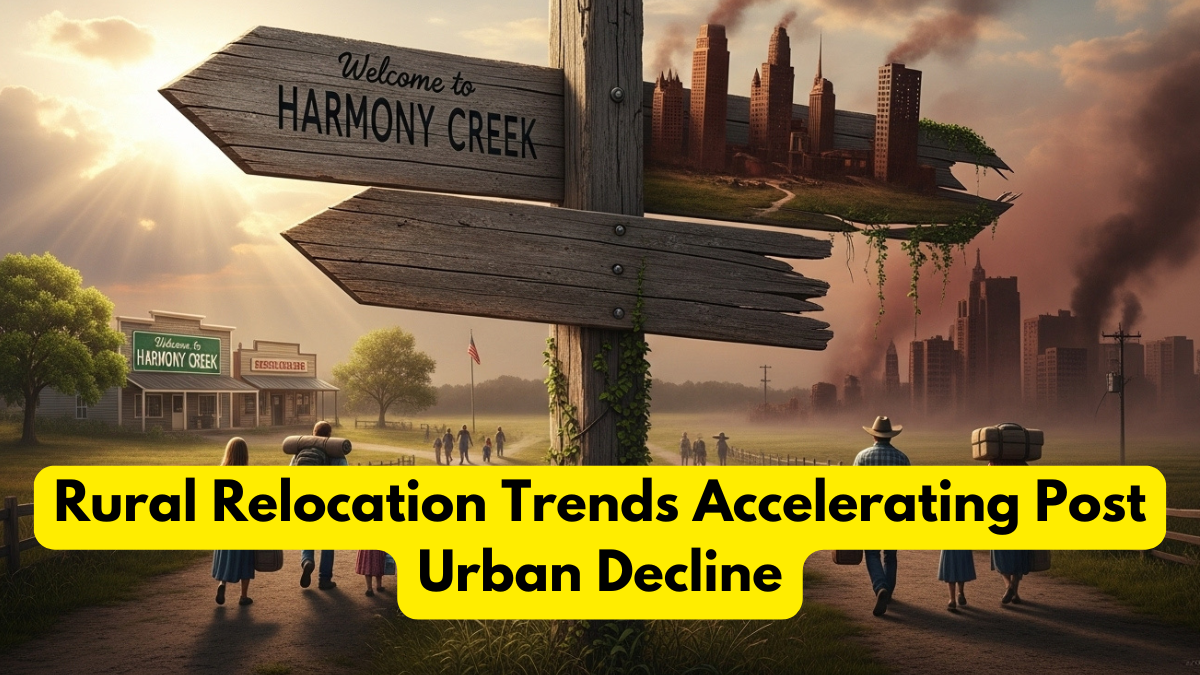
Understanding the Causes of Urban Decline
The acceleration of rural relocation cannot be understood without examining the factors contributing to urban decline. Rising housing costs have priced many residents out of cities, while overcrowding has reduced access to green spaces and essential services. In some regions, public infrastructure has struggled to keep pace with population density. These challenges have diminished the appeal of urban living and pushed people to explore alternatives aligned with new living trends.
Another contributing factor is lifestyle misalignment. Urban environments often demand long commutes, high stress, and constant competition. As priorities shift toward health, family, and balance, these pressures become less tolerable. Urban decline is not just economic but experiential, reflecting a growing disconnect between city life and human needs. In response, rural relocation offers a slower pace and stronger community ties, resonating with emerging living trends centered on quality of life.
How Living Trends Are Favoring Rural Areas
Modern living trends emphasize flexibility, self-sufficiency, and intentional living. Rural areas naturally support these values through lower costs, access to nature, and opportunities for customization. Rural relocation allows individuals to design lifestyles around space and time rather than scarcity. This flexibility is especially appealing to remote workers and entrepreneurs who are no longer tied to urban offices.
Community dynamics also play a role. Rural environments often foster closer relationships and shared responsibility. These social structures align with living trends that prioritize belonging over anonymity. As urban decline weakens traditional city advantages, rural regions are gaining renewed relevance. The appeal of rural relocation is no longer limited to retirees; it spans professionals, families, and creatives seeking environments that support sustainable living.
Comparison Between Urban Living and Rural Relocation
The table below highlights key differences between urban living and rural relocation in the context of changing living trends.
| Aspect | Urban Living | Rural Relocation |
|---|---|---|
| Housing Costs | High | Lower |
| Space Availability | Limited | Abundant |
| Pace of Life | Fast | Slower |
| Community Connection | Often fragmented | Stronger |
| Exposure to Urban Decline | High | Low |
| Alignment with Living Trends | Decreasing | Increasing |
This comparison illustrates why rural relocation is accelerating as urban decline reshapes perceptions of ideal living environments.
Economic and Social Impacts of Rural Relocation
The movement toward rural relocation is having meaningful economic and social effects. Rural economies benefit from new residents who bring skills, investment, and demand for services. Small towns experiencing population growth often see revitalization in local businesses, schools, and infrastructure. These changes counteract long-standing challenges associated with rural depopulation and align with positive living trends.
Socially, rural relocation encourages more participatory communities. Residents often engage directly in local governance, education, and cultural activities. This involvement strengthens resilience and shared identity. As urban decline continues to challenge city cohesion, rural communities offer models of collaboration and mutual support. These dynamics reinforce why rural relocation is increasingly viewed as a forward-looking choice rather than a retreat.
Challenges and Adaptation in Rural Living
Despite its advantages, rural relocation presents challenges that require adjustment. Access to healthcare, education, and specialized services can be limited in some areas. Infrastructure improvements and policy support are essential to accommodate growing populations. However, as living trends favor decentralization, investment in rural connectivity and services is increasing.
Individuals relocating must also adapt to cultural and logistical differences. Slower service timelines and greater self-reliance are common aspects of rural life. Yet many find these adjustments rewarding. By aligning expectations with local realities, newcomers can integrate successfully. In the context of urban decline, these trade-offs are often seen as acceptable or even desirable when compared to urban stressors.
Conclusion
The acceleration of rural relocation reflects a fundamental shift in how people evaluate place, opportunity, and quality of life. As urban decline challenges the dominance of cities, evolving living trends are elevating rural regions as viable and attractive alternatives. This movement is not about abandoning progress but redefining it around balance, resilience, and community. As infrastructure and connectivity continue to improve, rural relocation is poised to remain a defining trend in how societies reshape where and how they live.
FAQs
What is driving rural relocation today?
Rural relocation is driven by rising costs, lifestyle shifts, and the effects of urban decline.
Are living trends favoring rural areas long-term?
Yes, current living trends emphasize space, flexibility, and wellbeing, all supported by rural living.
Does urban decline mean cities will disappear?
No, urban decline reflects changing appeal, not total collapse, but it is influencing migration patterns.
Who benefits most from rural relocation?
Remote workers, families, and individuals seeking balance benefit most from rural relocation.
Can rural areas support modern lifestyles?
With improving infrastructure and connectivity, rural regions increasingly support modern living trends.
Click here to learn more