Take a moment to look around you—most modern designs, from smartphones to furniture, feature soft edges and smooth curves rather than sharp corners. This is not a coincidence. There is a deep psychological reason behind why people prefer rounded shapes, and it connects closely to how the human brain interprets safety, comfort, and aesthetics. Our attraction to curves is rooted in both evolution and perception.
In the field of design psychology, researchers have consistently found that people respond more positively to rounded forms than angular ones. These preferences influence everything from product design to architecture and branding. The way shapes affect our visual preference is subtle yet powerful, shaping our emotional responses without us even realizing it. Understanding this phenomenon helps explain why curved designs dominate many aspects of our daily lives.
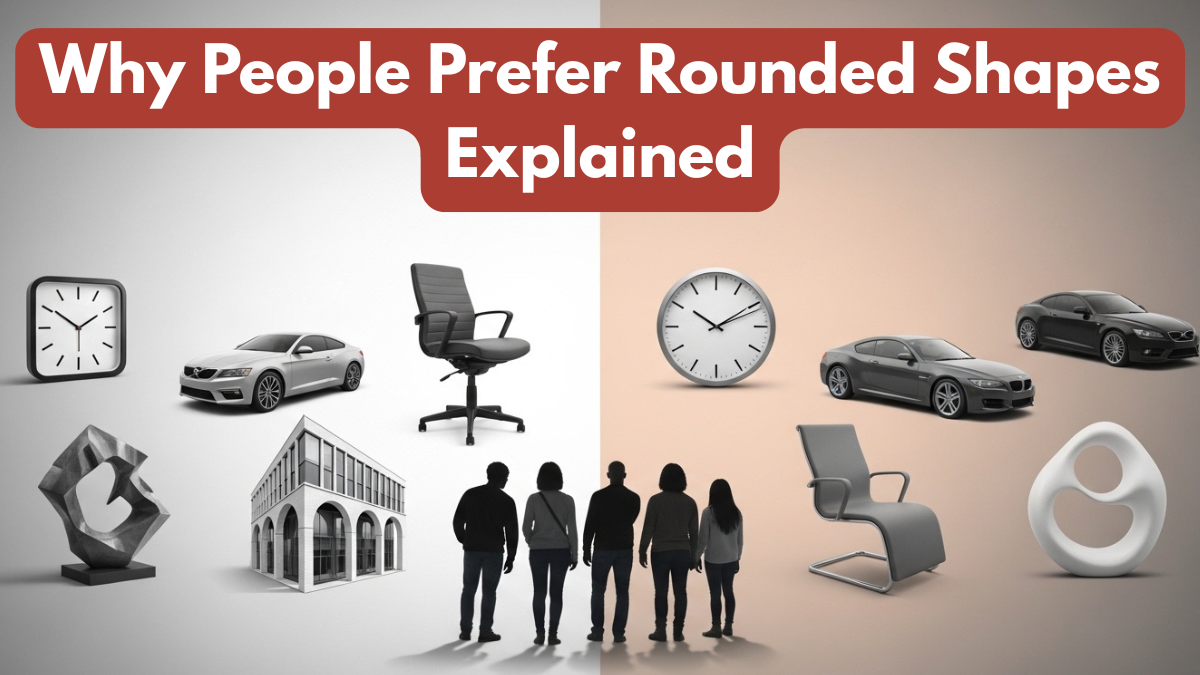
The Psychological Comfort of Curves
One of the key reasons why people prefer rounded shapes is that curves are associated with safety and softness. Sharp edges, on the other hand, can subconsciously signal danger. From an evolutionary perspective, humans learned to avoid pointed objects because they could cause harm.
This instinct still affects our visual preference today. Rounded shapes feel approachable and calming, while angular shapes may appear aggressive or harsh. In design psychology, this is known as emotional association—where the brain links shapes with feelings.
Some important psychological effects include:
- Rounded shapes feel safe and welcoming
- Sharp edges can trigger alertness or discomfort
- Curves create a sense of flow and continuity
- Soft forms are perceived as more natural
These factors strongly contribute to why people prefer rounded shapes in both everyday objects and visual designs.
How the Brain Processes Shapes
The human brain processes visual information quickly, and shape recognition plays a major role in this process. Studies in design psychology suggest that curved shapes are easier for the brain to process because they require less mental effort to interpret.
When people encounter smooth curves, their brain responds with a positive emotional reaction, influencing their visual preference. Angular shapes, however, require more attention and may activate areas of the brain associated with caution.
Here is a comparison to better understand this:
| Feature | Rounded Shapes | Angular Shapes |
|---|---|---|
| Emotional Response | Calm and pleasant | Alert or tense |
| Perceived Safety | High | Lower |
| Visual Processing | Easy and smooth | Requires more focus |
| Design Appeal | Modern and friendly | Bold but sometimes harsh |
| User Comfort | High | Moderate |
This table highlights how the brain’s reaction supports why people prefer rounded shapes, reinforcing the importance of visual preference in design.
Influence of Design Psychology in Everyday Life
The principles of design psychology are widely used in industries to influence user behavior. From logos to user interfaces, designers intentionally use curves to create a positive impression. This is another strong reason why people prefer rounded shapes.
For example, many popular brands use circular or curved logos because they feel more inviting. Similarly, smartphones and apps often feature rounded corners to enhance usability and comfort. These design choices align with natural visual preference, making products more appealing.
Key applications include:
- Product design with smooth edges
- User interfaces with rounded buttons
- Architecture featuring curved structures
- Branding with circular or soft shapes
All these examples show how design psychology leverages human perception to create better experiences.
Emotional and Aesthetic Appeal
Beyond functionality, aesthetics play a major role in why people prefer rounded shapes. Curves are often associated with beauty, harmony, and balance. They mimic natural forms like waves, clouds, and human features, which enhances their appeal.
This natural connection strengthens our visual preference, as the brain tends to favor patterns that resemble the environment. In design psychology, this is known as “biophilic design,” where elements inspired by nature create comfort and satisfaction.
Additionally, rounded shapes often appear more modern and stylish. This aesthetic advantage makes them a popular choice in contemporary design, reinforcing their dominance across industries.
Cultural and Social Influences
Cultural trends also contribute to why people prefer rounded shapes. Over time, societies have shifted toward designs that emphasize comfort and simplicity. Rounded forms align with these values, making them more widely accepted.
Social exposure further shapes visual preference. As people repeatedly see curved designs in products and media, they begin to associate them with quality and innovation. This repeated exposure strengthens their appeal, similar to how familiarity influences perception in design psychology.
Some cultural influences include:
- Minimalist design trends favoring soft edges
- Technology adopting rounded aesthetics
- Media reinforcing curved visual styles
- Consumer expectations evolving toward comfort
These factors collectively explain the growing popularity of rounded shapes.
Conclusion
In conclusion, the reason why people prefer rounded shapes is deeply rooted in psychology, biology, and cultural influence. Through the lens of design psychology, we see how curves evoke feelings of safety, comfort, and beauty, shaping our overall visual preference.
From brain processing to emotional responses, every aspect supports the appeal of rounded forms. As design continues to evolve, this preference is likely to remain strong, influencing how products, spaces, and experiences are created. Understanding this concept not only explains a common human tendency but also highlights the powerful connection between perception and design.
FAQs
Why do rounded shapes feel more comfortable?
Rounded shapes feel safer and less threatening, which positively affects visual preference.
What is design psychology in simple terms?
Design psychology studies how design elements like shapes influence human emotions and behavior.
Are curved designs always better than sharp ones?
Not always, but curves are generally preferred because they feel more natural and calming.
Why do companies use rounded shapes in logos?
Companies use them to create a friendly and approachable image, aligning with why people prefer rounded shapes.
Do cultural trends affect shape preferences?
Yes, cultural exposure and modern design trends strongly influence visual preference over time.
Click here to learn more