Workplace health has taken on renewed importance as organizations reassess how indoor environments affect productivity, comfort, and long-term well-being. Poor indoor air quality has been linked to fatigue, respiratory issues, and reduced cognitive performance, making it a critical concern for modern workplaces. In response, smart indoor air zoning is emerging as an advanced solution that tailors air quality conditions to specific areas within a facility. Rather than treating entire floors or offices uniformly, smart indoor air zoning uses data and automation to regulate airflow precisely. By combining intelligent ventilation tech with a focus on employee health, organizations are redefining how buildings support healthier and more productive work environments.
The Role of Ventilation Tech in Air Zoning Systems
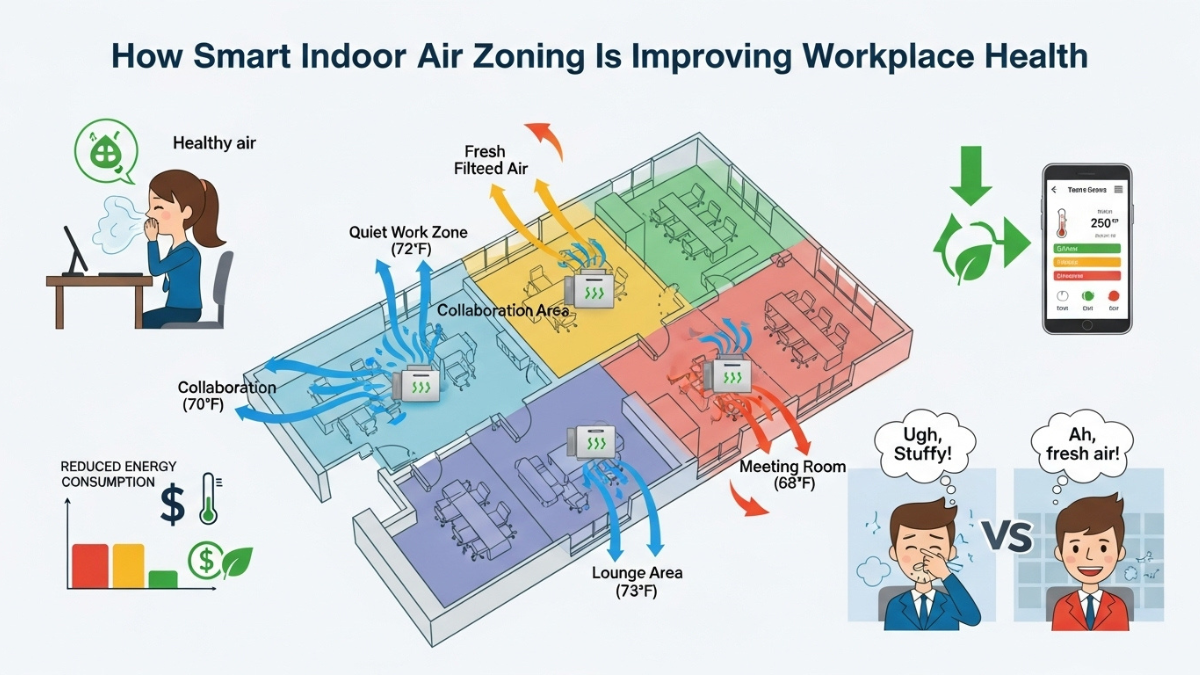
Advanced ventilation tech forms the technical foundation of smart indoor air zoning. Traditional HVAC systems distribute air evenly, regardless of occupancy or activity levels. In contrast, modern ventilation systems use sensors to monitor factors such as carbon dioxide, humidity, temperature, and airborne particles. This data allows smart indoor air zoning systems to adjust airflow dynamically, delivering fresh air where it is most needed. By optimizing ventilation tech, buildings can reduce energy waste while maintaining high air quality standards. This precision not only improves comfort but also plays a vital role in protecting employee health.
Improving Employee Health Through Targeted Air Control
The connection between indoor air quality and employee health is well established. Poor ventilation can increase the spread of airborne illnesses and contribute to headaches, allergies, and decreased concentration. Smart indoor air zoning addresses these risks by isolating zones with higher occupancy or specific air quality needs. For example, meeting rooms and collaborative spaces can receive increased airflow during peak use. This targeted approach ensures that employee health is supported consistently throughout the workday. By leveraging ventilation tech intelligently, organizations can create environments that actively promote wellness rather than merely meeting minimum standards.
The table below compares traditional air management systems with smart indoor air zoning:
| Aspect | Traditional HVAC Systems | Smart Indoor Air Zoning |
|---|---|---|
| Air Distribution | Uniform across buildings | Zone-specific control |
| Ventilation Tech | Manual or scheduled | Sensor-driven automation |
| Employee Health Impact | Inconsistent | Optimized and responsive |
| Energy Efficiency | Moderate | High through precision |
Smart Indoor Air Zoning in Modern Buildings
As buildings become smarter and more connected, smart indoor air zoning integrates seamlessly with building management systems. Facility managers can monitor air quality metrics across zones and make adjustments remotely. This visibility allows proactive maintenance and rapid response to air quality issues. In large buildings, zoning prevents over-ventilation in low-use areas while prioritizing high-traffic zones. By aligning ventilation tech with actual usage patterns, organizations achieve a balance between operational efficiency and employee health. This integration is particularly valuable in multi-use facilities where air quality needs vary significantly.
Why Organizations Are Investing in Air Zoning Technology
Organizations are increasingly investing in smart indoor air zoning as part of broader workplace modernization efforts. Improved employee health leads to lower absenteeism, higher engagement, and stronger employer branding. From a sustainability perspective, precise ventilation tech reduces energy consumption and operating costs. For buildings owners, these systems enhance asset value and regulatory compliance. As expectations for healthy workplaces rise, smart indoor air zoning is becoming a strategic investment rather than a discretionary upgrade.
Conclusion: The Future of Healthy Indoor Environments
The adoption of smart indoor air zoning represents a meaningful step forward in workplace health and building performance. By leveraging advanced ventilation tech, organizations can create responsive indoor environments that prioritize employee health while optimizing energy use. As buildings continue to evolve into intelligent ecosystems, air zoning will play a central role in ensuring comfort, safety, and productivity. Ultimately, smart indoor air zoning offers a scalable solution for healthier workplaces in a world where indoor air quality matters more than ever.
FAQs
What is smart indoor air zoning?
Smart indoor air zoning is a system that controls air quality separately in different areas of a building using sensors and automation.
How does ventilation tech support air zoning?
Ventilation tech adjusts airflow in real time based on occupancy and air quality data to maintain optimal conditions.
Why is employee health linked to indoor air quality?
Poor air quality can cause fatigue, illness, and reduced focus, directly affecting employee health.
Are smart indoor air zoning systems suitable for all buildings?
They can be adapted for offices, schools, healthcare facilities, and other buildings with varied air quality needs.
Does smart indoor air zoning reduce energy costs?
Yes, by delivering air only where needed, it improves efficiency while supporting employee health.
Click here to learn more