Organizations are facing unprecedented pressure to adapt to rapid technological change, evolving job roles, and persistent skills shortages. Traditional hiring models that rely heavily on external recruitment are proving slow, costly, and often misaligned with real organizational needs. In response, companies are turning inward to unlock the potential of their existing workforce. This shift has fueled the rise of smart talent marketplaces, digital platforms designed to connect employees with opportunities inside the organization based on skills rather than job titles.
By focusing on talent visibility and opportunity matching, smart talent marketplaces are redefining how work gets done. These platforms support internal mobility by allowing employees to move across roles, projects, and departments more easily. Powered by workforce AI, they analyze skills, experience, and aspirations to recommend relevant opportunities. As a result, organizations can accelerate reskilling while improving engagement and agility.
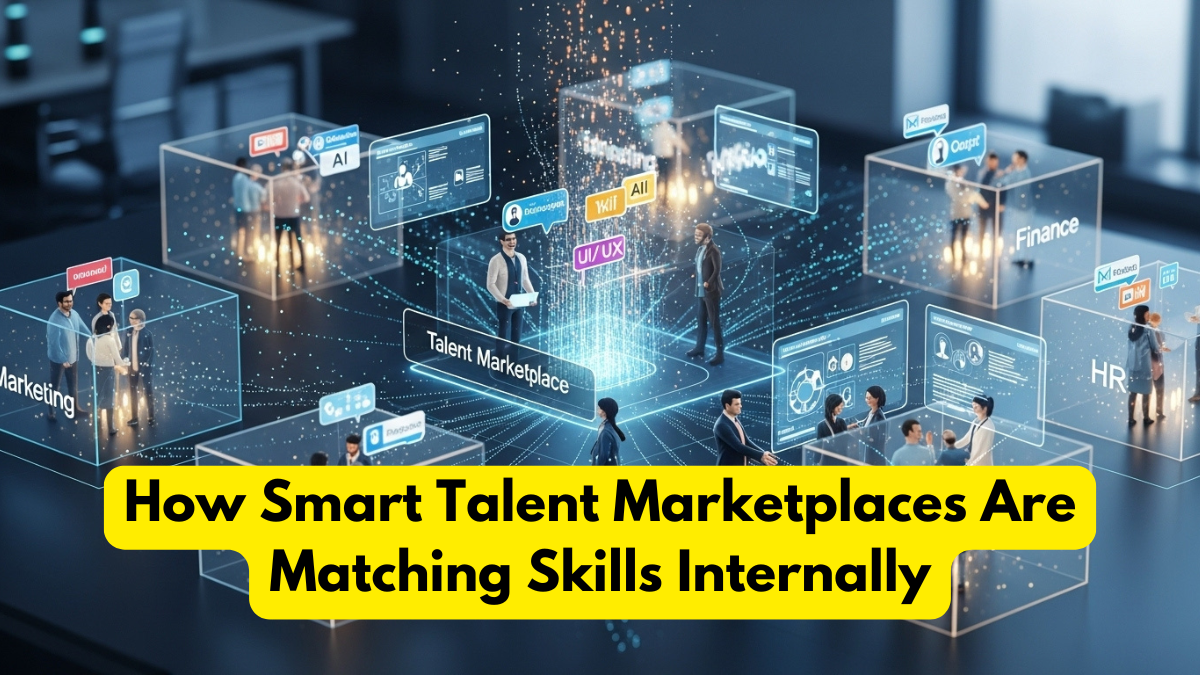
The Need for Internal Skill Matching
Many organizations struggle with a paradox: open roles and critical skill gaps coexist with underutilized internal talent. This disconnect often stems from limited visibility into employee capabilities. Smart talent marketplaces address this issue by creating a dynamic inventory of skills across the organization. Instead of relying solely on resumes or static job descriptions, these platforms continuously update skill profiles based on learning activity, project work, and performance data.
This approach transforms internal mobility from an informal process into a structured strategy. Employees gain visibility into opportunities they may not have known existed, while managers can access talent quickly without lengthy hiring cycles. By leveraging workforce AI, smart talent marketplaces ensure that matching decisions are data-driven and unbiased. This alignment enables faster reskilling and reduces dependency on external hiring.
How Smart Talent Marketplaces Work
At the heart of smart talent marketplaces is an intelligent matching engine powered by workforce AI. These systems analyze employee skills, career interests, availability, and organizational needs to recommend suitable roles or projects. Opportunities may include full-time positions, short-term assignments, mentorships, or learning pathways that support reskilling.
Employees interact with the platform much like a career marketplace, exploring options that align with their goals. Managers post opportunities and receive ranked matches based on skill fit rather than tenure or network connections. This transparency strengthens internal mobility and creates a more equitable environment for career growth. Over time, smart talent marketplaces become a central hub for workforce planning and development.
Benefits for Employees and Organizations
The adoption of smart talent marketplaces delivers measurable benefits on both sides of the employment relationship. For employees, these platforms provide clarity and agency over career progression. Instead of waiting for promotions or external offers, individuals can proactively pursue opportunities that build new skills and experiences. This continuous movement supports ongoing reskilling and keeps work engaging.
Organizations benefit from improved talent utilization and reduced turnover. By enabling internal mobility, companies retain institutional knowledge and shorten time-to-fill for critical roles. Workforce AI enhances decision-making by identifying skill adjacencies and predicting future needs. The table below compares traditional talent management with smart talent marketplaces:
| Aspect | Traditional Talent Management | Smart Talent Marketplaces |
|---|---|---|
| Visibility of skills | Limited | Organization-wide |
| Internal mobility | Informal | Structured and scalable |
| Use of workforce AI | Minimal | Core functionality |
| Reskilling speed | Slow | Accelerated |
| Talent retention | Inconsistent | Significantly improved |
These advantages explain why more organizations are embedding marketplaces into their HR strategies.
Accelerating Reskilling Through Opportunity-Based Learning
Reskilling is no longer a one-time initiative but a continuous requirement. Smart talent marketplaces support reskilling by linking learning directly to real work opportunities. Instead of abstract training programs, employees develop skills through hands-on projects and role transitions.
Workforce AI plays a critical role by identifying skill gaps and recommending targeted learning paths. When combined with internal mobility, this approach ensures that newly acquired skills are immediately applied. This integration reduces skill decay and increases return on learning investment. Over time, smart talent marketplaces create a culture where learning and work are seamlessly connected.
Enhancing Workforce Agility and Planning
In a rapidly changing environment, workforce agility is a competitive advantage. Smart talent marketplaces enable organizations to respond quickly to shifting priorities by reallocating talent where it is needed most. Leaders gain real-time insights into skill availability, capacity, and future gaps.
These insights inform strategic workforce planning and investment decisions. By leveraging workforce AI, organizations can simulate scenarios and plan for future demand. Internal mobility becomes a lever for resilience, allowing companies to adapt without disruptive restructuring. As reskilling becomes embedded in daily operations, the workforce remains relevant and future-ready.
Cultural Impact and Employee Engagement
Beyond operational efficiency, smart talent marketplaces have a profound cultural impact. They signal trust in employees’ potential and commitment to growth. When people see clear pathways for advancement, engagement and loyalty increase.
Transparent opportunity access also reduces bias and favoritism, reinforcing fairness. Employees from diverse backgrounds gain equal visibility and access to growth opportunities. By normalizing movement and internal mobility, organizations foster a culture of curiosity and adaptability. Supported by workforce AI, smart talent marketplaces align individual aspirations with organizational goals while driving continuous reskilling.
Conclusion
Smart talent marketplaces are transforming how organizations match skills internally by shifting the focus from roles to capabilities. By enabling internal mobility, leveraging workforce AI, and accelerating reskilling, these platforms unlock the full potential of the existing workforce. They reduce hiring friction, improve engagement, and build resilience in the face of constant change. As skills continue to evolve, smart talent marketplaces will remain a cornerstone of agile, future-ready organizations.
FAQs
What are smart talent marketplaces?
Smart talent marketplaces are digital platforms that match employees to internal opportunities based on skills, interests, and organizational needs.
How do smart talent marketplaces support internal mobility?
They make internal opportunities visible and accessible, enabling employees to move across roles and projects more easily.
What role does workforce AI play in these platforms?
Workforce AI analyzes skills and demand to recommend matches, identify gaps, and support workforce planning.
Do smart talent marketplaces help with reskilling?
Yes, they link learning directly to real work opportunities, accelerating practical reskilling.
Are smart talent marketplaces only for large organizations?
While more common in large enterprises, they can be adapted for organizations of various sizes.
Click here to learn more